| Type | PreciBal 200 | PreciBal 314 | PreciBal 400 |
| Orifice area | 200 cm2 (31.00 in2) | 314 cm2 (48.67 in2) | 400 cm2 (62.00 in2) |
| Precipitation range | 1500 mm (59.06 in) | 955 mm (37.60 in) | 750 mm (29.53 in) |
| Absolute accuracy | ±0.1 % | ||
| Relative accuracy | ±1 % | ||
| Accuracy of precipitation amount | 0.025 mm (0.001 in) | ||
| Accuracy of precipitation intensity | 0.025 mm/min (0.001 in/min) | ||
| Threshold | 0.05 mm (0.002 in) | 0.032 mm (0.0013 in) | 0.025 mm (0.001 in) |
| Maximum precipitation intensity | 3600 mm/hr (141.73 in/hr) | ||
| Resolution | 0.001/0.01 mm (0.00004/0.0004 in) | ||
| Measuring element | load cell | ||
| Supply voltage | 5 … 30 V DC (reverse polarity protection) | ||
| Power consumption/Current consumption | <25 mW; 4 mA (5 V) … 0.5 mA (24 V) | ||
| Heating voltage (heating power) | 10–30 V AC/DC; I ≈ 0.8–2.5 A; P ≈ 8–75 W | ||
| Pulse output | Relay contact; 2 Hz (250/250 ms); 1/0.1/0.01 mm per pulse; max. 24 V / 0.5 A | ||
| Interfaces | SDI-12, RS-485 (2-wire, 300–115,200 bit/s), Bluetooth® Low Energy, USB (optional) | ||
| Installation | SDI-12 Version 1.4, Modbus RTU | ||
| Dimensions (without base) | Ø 385 × 650 mm (Ø 15.16 × 25.59 in) |
Ø 385 × 610 mm (Ø 15.16 × 24.02 in) |
Ø 385 × 610 mm (Ø 15.16 × 24.02 in) |
| Mass | 9.5 kg (20.94 lb) | 9.5 kg (20.94 lb) | 9.5 kg (20.94 lb) |
| Operating temperature range |
-40 … +70 °C (−40 … +158 °F) | ||
| Storage temperature | -50 … +70 °C (−58 … +158 °F) | ||
| Operating humidity | 0 … 100 % | ||
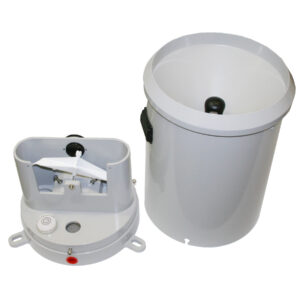
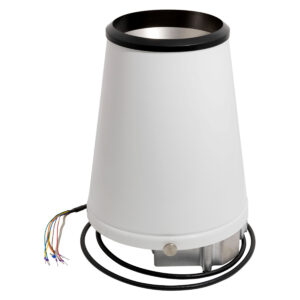
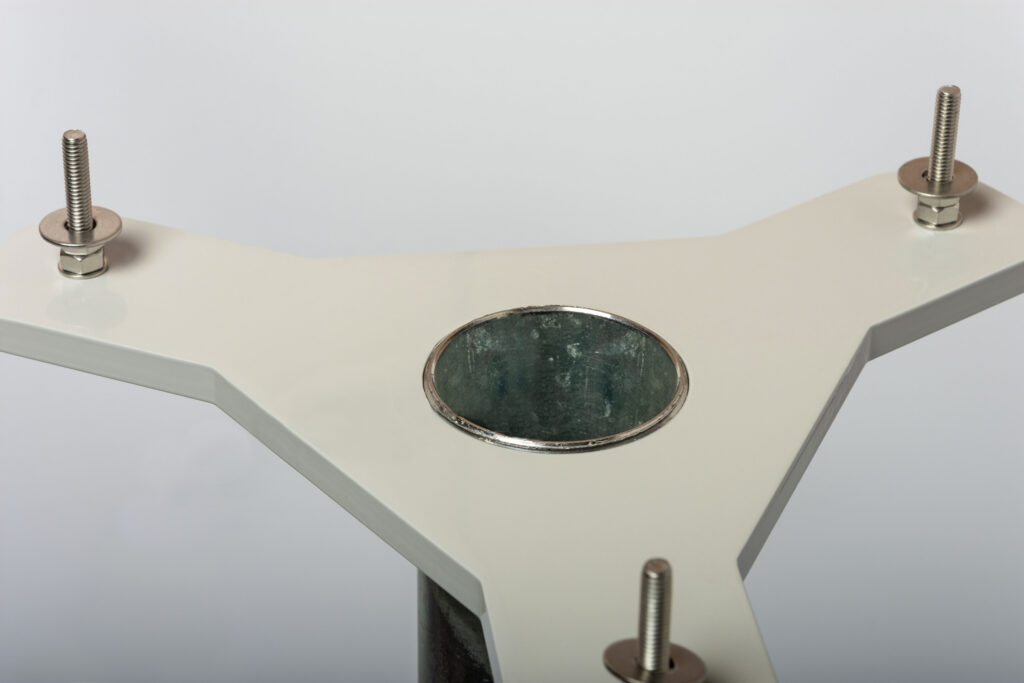
KISTERS’ PreciBal is an innovative high-quality precipitation gauge using the weighing principle for measuring liquid, solid and mixed precipitation within a wide temperature range. It conforms to the most stringent requirements of the WMO. PreciBal is a low power device even during cold winter times by using anti-freeze agent to decrease the freezing point of collected water. The optional heating is controlled by a combination of temperature settings and solid precipitation events to avoid snow capping and ice accretion at extreme environmental conditions.
PreciBal achieves very high levels of accuracy by means of correcting the data to eliminate the influence of wind vibration, particles, unrealistic weight variations, evaporation, and temperature fluctuation. The result is outstanding measuring performance in terms of accuracy, long term calibration for real-time precipitation monitoring at entire intensity range up to 3000 mm/h.
The compact design allows for easy installation. Due to its low power consumption PreciBal is ideal for remote stations powered by battery or a small solar panel. Two different versions regarding the bucket orifice (200 / 314 cm2) and collecting size (1.500 / 1.000 mm) are available. Processed precipitation data (one-minute intensity, various cumulative precipitation data, weight, temperature) are available via serial interfaces and via the PreciBal app (see flipside).
PreciBal with its solid state design without any moving part measures liquid and solid precipitation by its factory life time calibrated and adjusted load cell at highest standards and performance on accuracy and reliability. Low power consumption, low maintenance and high accuracy provide reduced operational costs, less staff deployment in the field, better data and high data availability.
In addition to KISTERS’ data loggers (see flipside), PreciBal is compatible with other data loggers and ideal for deployment at new sites or expansion of precipitation monitoring networks.
“HailSens represents the culmination of years of dedicated research. As the only hail sensor that seamlessly integrates with hailpad data – the gold standard for scientists worldwide.”

You are currently viewing a placeholder content from YouTube. To access the actual content, click the button below. Please note that doing so will share data with third-party providers.
More InformationYou need to load content from reCAPTCHA to submit the form. Please note that doing so will share data with third-party providers.
More InformationYou need to load content from reCAPTCHA to submit the form. Please note that doing so will share data with third-party providers.
More InformationYou need to load content from reCAPTCHA to submit the form. Please note that doing so will share data with third-party providers.
More Information